
Canon EF 50mm f/1.8 STM Lens
4.8Editor score
F/1.8 maximum aperture
STM motor quiet
Lightweight design
Prime focal length
DSLR compatible
This guide compares the top ten camera lenses for product photography to help you choose the best optics for sharp images and professional results.
Selecting the right camera lens for product photography is essential for capturing crisp details and accurate colors. Whether you shoot jewelry or larger items, the glass you choose defines image clarity and depth of field in every shot.
We evaluated ten real lenses based on optical performance, autofocus speed, and build quality. Each entry offers unique strengths for studio work or handheld shots. Our list covers full frame and crop sensors to match your current camera system.
Every pick shows specific specs and real world use cases for product shoots. Prices change frequently so check current listings before buying. Read on to find the lens that fits your budget and style needs perfectly.
4.8Editor score

4.8Editor score
4.7Editor score
This side by side comparison highlights key specs and use cases for all ten lenses. We focus on focal lengths, apertures, and compatibility to help you decide which glass suits your product shoots best.


This RF lens stands out as the top choice for product photography due to its high image quality and bright f/2.8 aperture. It delivers sharp results across the zoom range while offering optical image stabilization of up to five stops of shake correction.
We may earn a commission when you buy through this link, at no additional cost to you.
The high speed smooth and quiet autofocus with Nano USM ensures you capture crisp details without delay. The minimum focusing distance of 0.69 ft at wide angle allows close up shots of small items like jewelry or components.
While the lens is heavy compared to primes, the versatility of a zoom range saves time in studio setups. The control ring allows direct setting changes for exposure tweaks during shoots without diving into menus.
Buy this lens if you need a reliable all in one solution for Canon mirrorless cameras like EOS R5 or R6. It is ideal for professionals who value image quality and speed over lightweight portability.
The bright f/2.8 aperture ensures consistent exposure across zooms and lets in ample light for studio or ambient shots.
Up to five stops of shake correction help maintain sharpness when shooting handheld or in lower light conditions.
We may earn a commission when you buy through this link, at no additional cost to you.
This 50mm prime offers exceptional value for product photographers needing a fast lens on a budget. With a maximum aperture of f/1.8 it provides great low light performance and pleasing background blur for isolating items.
We may earn a commission when you buy through this link, at no additional cost to you.
The stepping motor delivers near silent continuous move servo AF for movies and smooth AF for stills. Its minimum focusing distance of 1.15 feet allows you to get close to subjects while maintaining sharp details.
Although it lacks optical stabilization the lightweight design makes handheld shooting manageable with care. The lens construction of 6 elements in 5 groups ensures clarity and color fidelity across various product types.
Choose this lens if you shoot on Canon DSLRs and want a cost effective option for portraits or still life. It is perfect for hobbyists or small businesses needing professional results without high cost.
The f/1.8 maximum aperture captures more light allowing for faster shutter speeds or lower ISO in dim settings.
The STM motor ensures silent focusing which is useful for video work or quiet studio environments.
We may earn a commission when you buy through this link, at no additional cost to you.
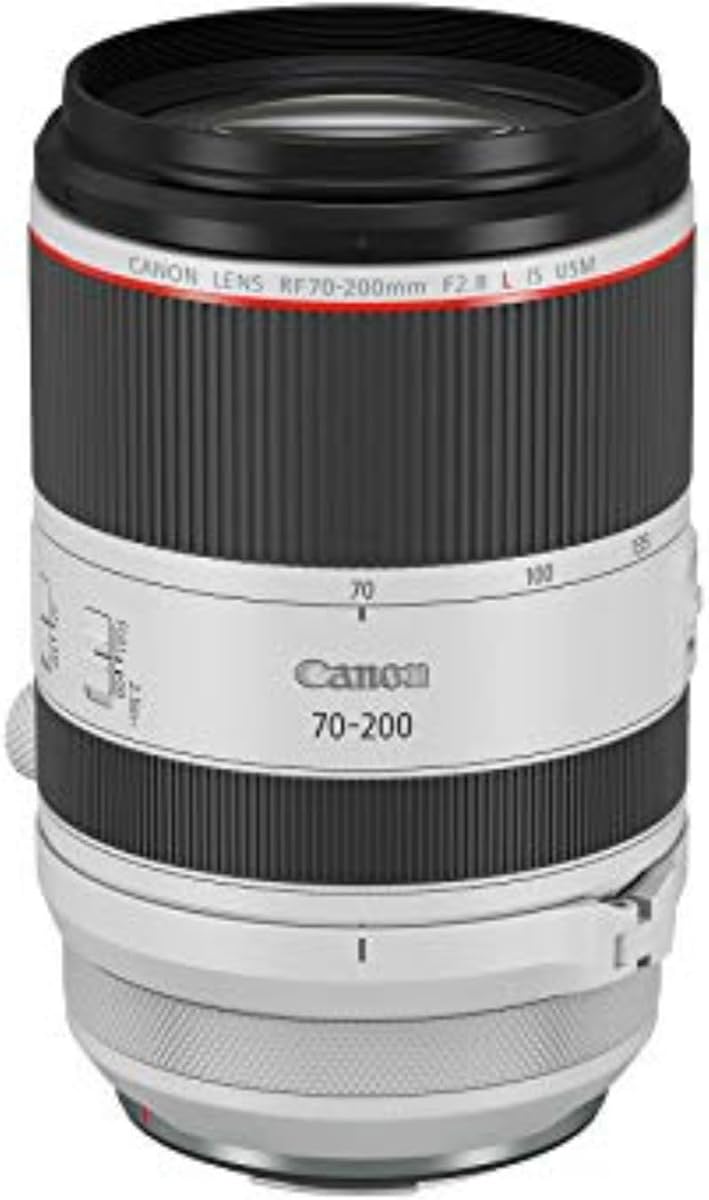
This compact and lightweight telephoto zoom delivers high image quality and bright f/2.8 aperture for demanding product work. Its optical image stabilization with up to five stops of shake correction ensures sharp results even at longer focal lengths.
We may earn a commission when you buy through this link, at no additional cost to you.
The high speed smooth and quiet autofocus with dual Nano USM allows precise tracking of subjects. Minimum focusing distance of 2.3 ft lets you frame products tightly while maintaining comfortable working space in the studio.
As a premium RF lens it is fully compatible with Canon Full Frame Mirrorless Cameras like EOS RP or R5. The design prioritizes mobility without sacrificing optical performance making it ideal for on location shoots.
Invest in this lens if you need a high end telephoto option for detailed product shots from a distance. It suits professionals who value portability and speed alongside professional image quality.
Despite its telephoto range the lens remains smaller and lighter than many counterparts for easier handling.
Dual Nano USM motors provide fast smooth and quiet focusing suitable for both photo and video.
We may earn a commission when you buy through this link, at no additional cost to you.
This fully manual 85mm lens offers precise focus control and creative freedom for photographers who prefer hands on operation. It adopts a manual focus design requiring photographers to adjust parameters such as shutter speed and aperture before shooting.
We may earn a commission when you buy through this link, at no additional cost to you.
Equipped with 6 rounded aperture blades and internal focus mechanism it ensures fast and quiet focusing. The fusion of hybrid aspherical lens and ultra multi-coating technology reduces aberrations and glare for clear image quality.
While it demands careful setup this lens inspires unlimited artistic creativity helping you transcend conventions. It is perfect for learning photographic skills and exploring infinite possibilities in product and portrait work.
Choose this lens if you value adaptability and durability over automatic convenience. It fits Canon EOS Rebel and other DSLRs well for static product shoots where timing is not critical.
Manual focus lets you control exact focal points for detailed product images without reliance on sensors.
Compatible with a broad range of Canon DSLRs including Rebel and higher end models for flexibility.
We may earn a commission when you buy through this link, at no additional cost to you.
This compact and lightweight fixed 50mm focal length lens offers a large f/1.8 aperture for low-light photography and creative background blur. A stepping motor provides smooth and quiet continuous AF during video recording and photo shooting.
We may earn a commission when you buy through this link, at no additional cost to you.
Optimized lens placement and coatings help deliver outstanding color balance while minimizing ghosting and flare. The control ring allows direct setting changes for quick adjustments without removing hands from the camera body.
Designed for EOS R Series mirrorless cameras it maintains compatibility with systems like EOS R5 and R6. Its small size makes it easy to carry for on the go product shoots in varied environments.
Select this lens if you need a reliable RF prime that balances performance with portability. It suits photographers seeking sharp results and creative blur in a small package.
f/1.8 aperture enables beautiful background separation to highlight products against clean backdrops.
Direct setting changes via control ring streamline workflow during active photography sessions.
We may earn a commission when you buy through this link, at no additional cost to you.
This state-of-the-art prime lens features a new large Hyper Sonic motor that delivers ample torque to the focusing group for outstanding speed. Its large 1.8 aperture allows for more creative control over imagery in event and portrait settings.
We may earn a commission when you buy through this link, at no additional cost to you.
A stunning compression effect makes this lens ideal for portraits and detailed product shots from a distance. Handcrafted at the factory in Aizu Japan each lens undergoes individual evaluation before leaving the facility.
The dust and splash proof mount ensures performance in any condition protecting the lens during outdoor or rugged shoots. While designed for portraits it offers high quality optics for detailed product work with strong subject isolation.
Choose this lens if you need a long focal length prime with exceptional sharpness and build quality. It suits advanced photographers who want creative control and reliability in demanding environments.
f/1.8 aperture supports shallow depth of field to isolate subjects effectively.
Rugged mount protects internal components from elements during diverse shooting conditions.
We may earn a commission when you buy through this link, at no additional cost to you.
This EF mount lens provides a wide focal range with 75 to 300mm and an aperture range of f/4-5.6. It features a DC autofocus motor and a minimum focus distance of 4.9 feet allowing decent close up capability.
We may earn a commission when you buy through this link, at no additional cost to you.
The improved mechanism makes zooming smoother while the front part of zoom ring sports silver ring for grip. It measures 2.8 inches in diameter and weighs 16.8 ounces for manageable handling during shoots.
As a renewed unit it offers a cost-effective option for those needing telephoto reach without high cost. The angle of view ranges from 32 to 8 degrees diagonal offering versatile framing for distant or large products.
Select this lens if you need an affordable telephoto zoom for Canon SLR cameras on a budget. It is suitable for beginners who want extra reach without investing in premium optics.
75 to 300mm range allows flexible framing from medium to distant product shots.
Improved mechanics ensure smoother operation for precise framing adjustments.
We may earn a commission when you buy through this link, at no additional cost to you.
This lens kit includes a 0.45x wide angle lens and 15x macro lens for smartphones plus a rechargeable LED fill light. It is compatible with all smartphones including iPhone Samsung Galaxy and Google Pixel for versatile mobile photography.
We may earn a commission when you buy through this link, at no additional cost to you.
The TruView wide angle lens captures 45% more picture with every snap while crafted from aircraft-grade aluminum for durability. The Clarus macro lens magnifies nearby subjects for breathtaking super close-up photos with precision focus.
GlowClip LED light clips anywhere on your phone to instantly illuminate your subject with warm continuous light. This avoids blinding flash and provides better control over lighting in darker settings or venues.
Choose this kit if you shoot product photos with a phone and need portable optical enhancement. It suits hobbyists and pros wanting macro or wide capabilities without buying a dedicated camera.
Capture wider scenes without dark corners using high quality coated glass elements.
Adjustable brightness settings provide better lighting than built-in phone flash.
We may earn a commission when you buy through this link, at no additional cost to you.
This camera kit includes a 24.1 Megapixel CMOS APS-C sensor with built-in Wi-Fi and NFC technology for connectivity. It comes with dual EF-S 18-55mm and EF 75-300mm lenses covering wide to telephoto focal needs.
We may earn a commission when you buy through this link, at no additional cost to you.
Improved Dual Pixel CMOS AF and eye detection AF deliver reliable autofocus performance for stills and video. The optical viewfinder offers approx 95% viewing coverage allowing clear composition during product setups.
With video capture resolution of FHD 1080p you can shoot product videos smoothly on a budget. It works with EOS Utility Webcam Beta Software to turn the camera into a high-quality webcam for live sessions.
Buy this kit if you are a beginner needing a full camera solution for learning and product work. It offers versatility through two lenses and connectivity for easy sharing of results.
Two zooms cover wide to telephoto needs for diverse product sizes and angles.
Transfer images instantly to your phone or computer for quick review and sharing.
We may earn a commission when you buy through this link, at no additional cost to you.
This telephoto fixed lens offers a focal length of 200mm with a maximum aperture of 1:2.8 for clear and bright imaging. Its lens construction features 9 elements in 7 groups to correct aberrations and ensure high resolution.
We may earn a commission when you buy through this link, at no additional cost to you.
The closest focusing distance is 1.5m or 4.9 ft allowing moderate close-up work for detailed product shots. Weighing 1.7 lbs it balances durability with manageable weight for handheld shooting in controlled spaces.
With a filter thread of 72mm you can attach polarizers or ND filters for controlling glare or exposure. It is designed for SLR cameras and provides professional quality for static product photography.
Select this lens if you need a high-quality fixed prime for detailed product work from a distance. It suits photographers prioritizing sharpness and build quality over zoom flexibility.
Prime lenses typically offer sharper optics and larger apertures than zooms.
Professional series construction ensures longevity and reliability in daily use.
We may earn a commission when you buy through this link, at no additional cost to you.
Choosing the right lens involves considering focal length aperture and build. Use these factors to match a lens with your shooting style and camera type.
Focal length determines the field of view and how much of the product fills the frame. Shorter focal lengths like 24mm to 50mm work well for wider views or flat lays while longer ones like 85mm to 200mm allow distant framing and stronger compression.
Select a length that fits your studio space and how close you can get to the subject.
Aperture controls how much light enters and the depth of field. A wide aperture such as f/2.8 or f/1.8 helps in low light and creates soft backgrounds to isolate the product from distractions.
Look for f/2.8 or wider if you need creative background blur or low-light capability.
Autofocus type affects speed and noise levels during use. Stepping motors like STM or Nano USM provide quiet smooth focusing ideal for video and stills without disturbing the subject.
Prioritize silent AF if you record product videos or work in quiet environments.
Optical stabilization helps reduce camera shake for sharper handheld shots. Up to five stops of correction enable clearer images when shooting at slower shutter speeds without a tripod.
Choose lenses with image stabilization if you often shoot without a stable support.
Matching the lens mount with your camera body is essential for proper function. RF lenses suit Canon mirrorless cameras while EF lenses work on DSLRs. Using adapters may impact performance or size.
Verify your camera type before purchasing to ensure full compatibility without adapters.
Build quality affects durability and ease of handling during long shoots. Lightweight lenses reduce fatigue while robust builds protect internal optics from dust and accidental bumps.
Balance weight and build based on whether you shoot on a tripod or handheld.
Close focusing distance defines how near you can get to the subject for detail shots. Smaller products like jewelry need lenses with short minimum focus distances to capture fine textures clearly.
Check minimum focus specs if you plan to shoot small or macro-level product details.
Price often reflects optical performance and build but budget options exist. Evaluate whether the features match your needs rather than chasing the highest number available.
Consider renewed or older models to save money without sacrificing key features.
Attach the lens to your camera body securely by aligning the index mark on the lens with the corresponding mark on the mount. Turn it clockwise until you hear a click to lock it in place.
Adjust the aperture and focus ring based on your subject distance. For manual lenses turn the focus ring until details on the product appear sharp in the viewfinder.
Clean the front element regularly with a microfiber cloth to remove dust or fingerprints. Store the lens in a dry case with a cap when not in use to prevent scratches and moisture.
A 50mm to 100mm focal length is often ideal for product photography because it offers minimal distortion and natural perspective. Wider angles like 24mm work for flat lays while longer telephoto lenses like 200mm allow detailed shots from a distance.
Wide apertures like f/2.8 help isolate the product by blurring the background and provide more light in low light settings. However for many product shoots you may prefer smaller apertures like f/8 to ensure sharpness across the whole product.
Yes macro lenses are excellent for capturing fine details on jewelry or textures. They allow very close focusing distances and high magnification to reveal intricate features that standard lenses might miss.
Optical stabilization is helpful if you shoot handheld but may not be critical when using a tripod. In studio environments where cameras are fixed stabilization adds less value but helps if you shoot on location.
Choose RF lenses for Canon mirrorless models and EF lenses for DSLR bodies. Mixing mounts requires adapters that may affect performance or size so match the lens to your camera system.
Use a lens hood to block stray light from hitting the glass at odd angles. Position lights carefully to avoid reflections on the product surface and consider using polarizers to reduce glare.
Our top picks include the RF24-70mm F2.8 L for versatility the EF 50mm f/1.8 for budget and the RF70-200mm F2.8 for premium telephoto needs. Each lens offers distinct strengths for different product types and camera systems.
Prioritize focal length and aperture based on your typical product sizes and desired background blur. Consider build quality and focus speed if you shoot video or in dynamic environments.
Check current prices before buying since costs can fluctuate over time. Review the product images and specifications carefully to confirm the lens matches your camera and creative goals.