
Upgrade 49:1 & 9:1 Dual Mode HF End Fed Antenna
3.9Editor score
Dual 49:1 and 9:1 modes
Versatile mounting options available
Lightweight and portable design
This guide compares the top ten End Fed Antennas for Ham Radio based on performance, durability, and ease of setup for amateur radio operators.
End fed antennas offer a practical solution for amateur radio operators seeking efficient communication without complex grounding systems. These antennas simplify setup for field operations and home stations alike, delivering reliable signal transmission across multiple bands with minimal equipment.
We evaluated ten leading models based on construction quality, impedance matching, power handling, and versatility. Our analysis focuses on real-world performance metrics and user feedback to ensure you select a antenna that meets your specific operational needs and environmental conditions.
Each review highlights key strengths and trade-offs to help you make an informed decision. Note that availability and specifications may change over time, so verify current details before purchasing to ensure compatibility with your existing radio equipment and deployment strategy.
3.9Editor score

4.7Editor score

4.6Editor score
This table provides a side-by-side overview of the ten selected models, highlighting their core specifications and unique features to help you quickly identify the best fit for your ham radio station.


The JYR4010-150W stands out as a top choice for operators seeking reliability and performance. With a 4.7 rating, it delivers consistent low SWR across 10m, 15m, 20m, and 40m bands without external tuning.
We may earn a commission when you buy through this link, at no additional cost to you.
Its integrated 1:64 Balun ensures efficient impedance transformation, allowing up to 150W on SSB. The innovative natural cooling design helps maintain stable performance during extended transmissions, making it ideal for POTA and SOTA activations.
While the cost is higher than budget models, the build quality justifies the investment. The sealed housing and UV-resistant materials ensure longevity in diverse weather conditions, though users should inspect guy ropes every six months for safety.
For serious operators prioritizing consistent field performance, this antenna offers the best balance of power handling and ease of use. It simplifies setup significantly compared to random wire antennas requiring tuners.
Engineered for smooth operation across four major HF bands, this antenna reduces the need for complex matching networks during field ops.
The ABS shell and reinforced insulator protect against environmental stress, ensuring stable signal transmission over years of outdoor use.
We may earn a commission when you buy through this link, at no additional cost to you.
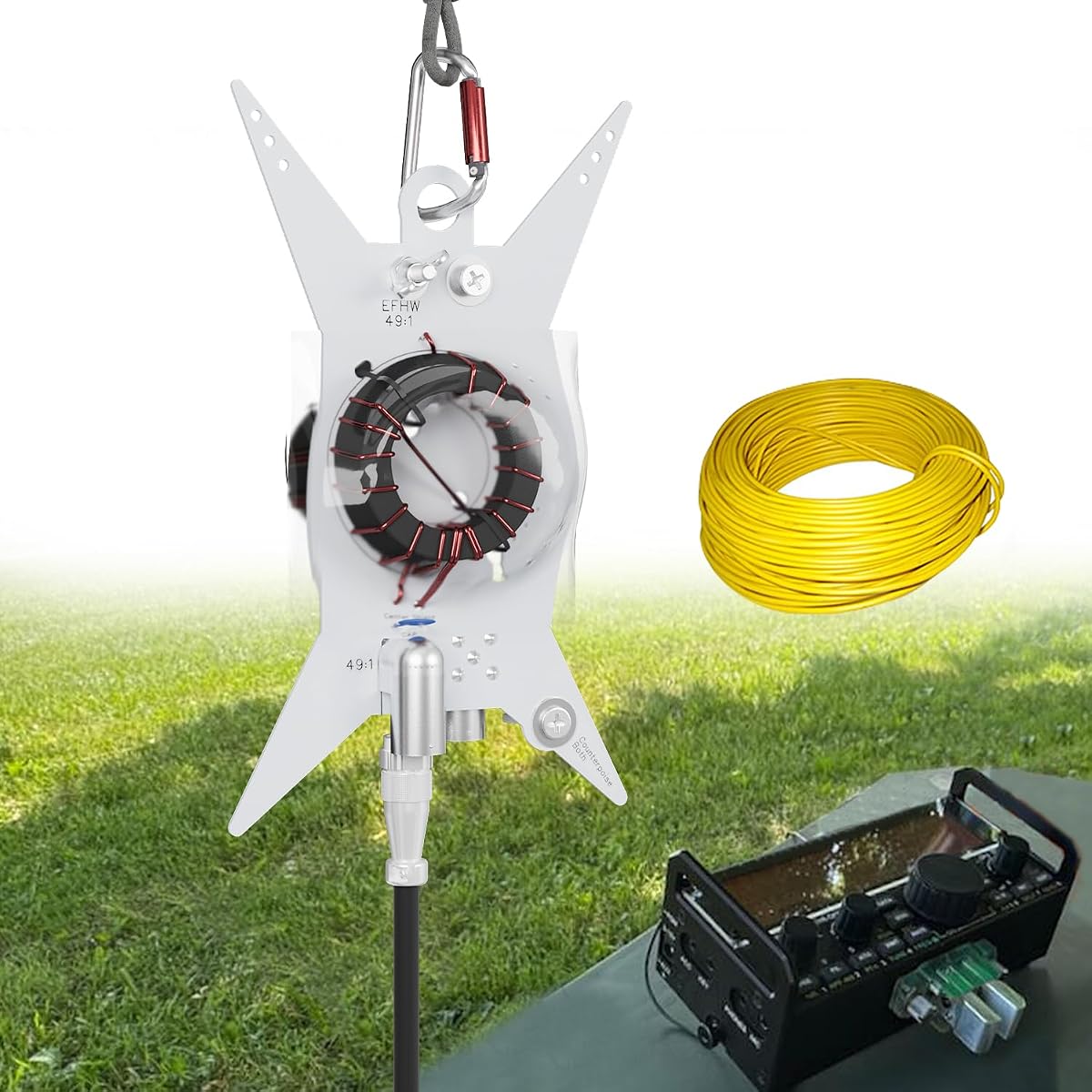
This dual-mode antenna offers significant value for beginners exploring end fed setups. With both 49:1 and 9:1 options in one unit, it supports resonant and random wire configurations depending on your radio and tuner setup.
We may earn a commission when you buy through this link, at no additional cost to you.
Its lightweight design makes it easy to carry during outdoor expeditions. The windproof and rainproof construction ensures stable operation even in harsh weather, though the overall rating suggests some variability in consistency.
The main trade-off is the lack of detailed guidance for optimal tuning. Users may need to experiment with wire lengths to achieve the best SWR across bands, which adds time to setup compared to pre-tuned models.
For those on a tight budget who need flexibility, this model provides an excellent entry point. It is particularly suited for temporary deployments where portability outweighs the need for premium build materials.
The inclusion of both impedance ratios allows operators to experiment with different wire types without buying separate antennas for each scenario.
Its compact size and lightweight nature make it ideal for backpacking trips or quick temporary setups in remote locations.
We may earn a commission when you buy through this link, at no additional cost to you.
The JYR8010-150W delivers premium performance with eight bands of natural resonance, eliminating the need for an external tuner in most cases. Its cold drawn multi-strand copper wire ensures durability and efficient signal transmission across 3.5 to 29.7 MHz.
We may earn a commission when you buy through this link, at no additional cost to you.
With a 150W SSB power rating, it handles high-duty modes like FT8 and SSB effectively. The included 20m rope simplifies initial setup, while the sturdy 64:1 balun provides reliable impedance matching for consistent contacts.
Users must account for the significant wire length of 39.6m, requiring adequate space for deployment. Optimal performance depends on keeping the antenna three meters away from buildings and the ground to minimize interference.
This model is ideal for operators seeking maximum frequency coverage without tuning complexity. It represents a robust investment for permanent home stations or serious field operations where reliable multi-band access is critical.
Covering eight distinct bands naturally allows operators to switch frequencies quickly during contests or emergency communications.
The inclusion of an installation rope helps users get the antenna deployed faster, reducing setup time during urgent activations.
We may earn a commission when you buy through this link, at no additional cost to you.
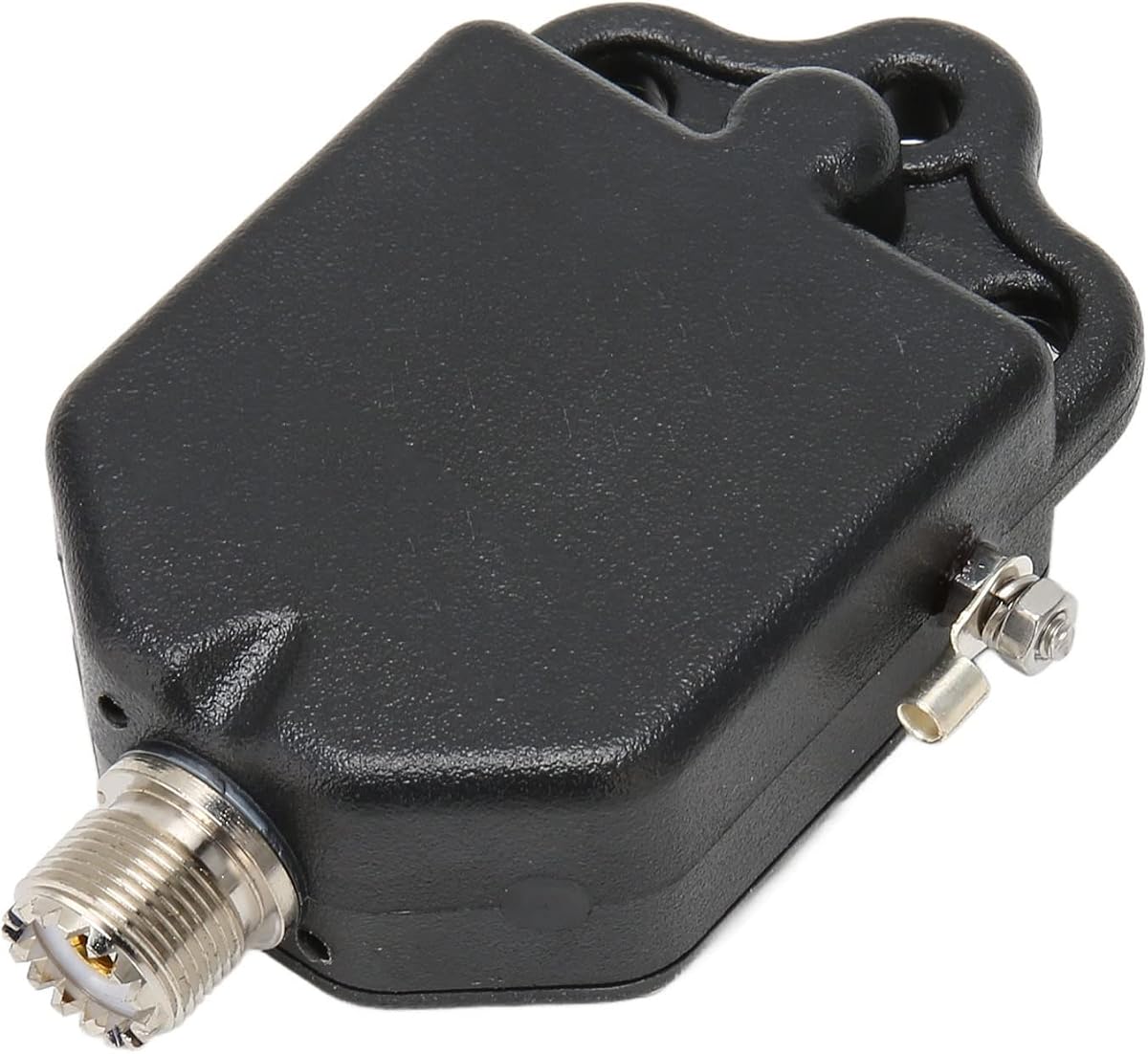
This antenna covers a broad frequency range from 1 to 30 MHz, supporting various modes like SSB, FT8, FM, and FSK. The 1:64 balun simplifies connection to most HF transceivers, reducing the need for external components.
We may earn a commission when you buy through this link, at no additional cost to you.
Constructed from premium ABS material, it offers high hardness and resistance to wear. This ensures stable reception even in demanding outdoor conditions. The compact size makes it easy to transport for temporary deployments.
Operators should note that wire trimming is necessary to optimize performance for specific bands. Without an included rope, users must provide their own support lines for hanging the antenna between trees or poles.
It is a solid mid-range choice for those needing reliable multi-band capability without premium costs. The 4.5 rating reflects its consistent performance in diverse ham radio applications.
Operating across 1 to 30 MHz allows communication on nearly every amateur band, maximizing contact opportunities during field trips.
The ABS housing protects internal components from moisture and physical stress, extending the antenna lifespan significantly.
We may earn a commission when you buy through this link, at no additional cost to you.
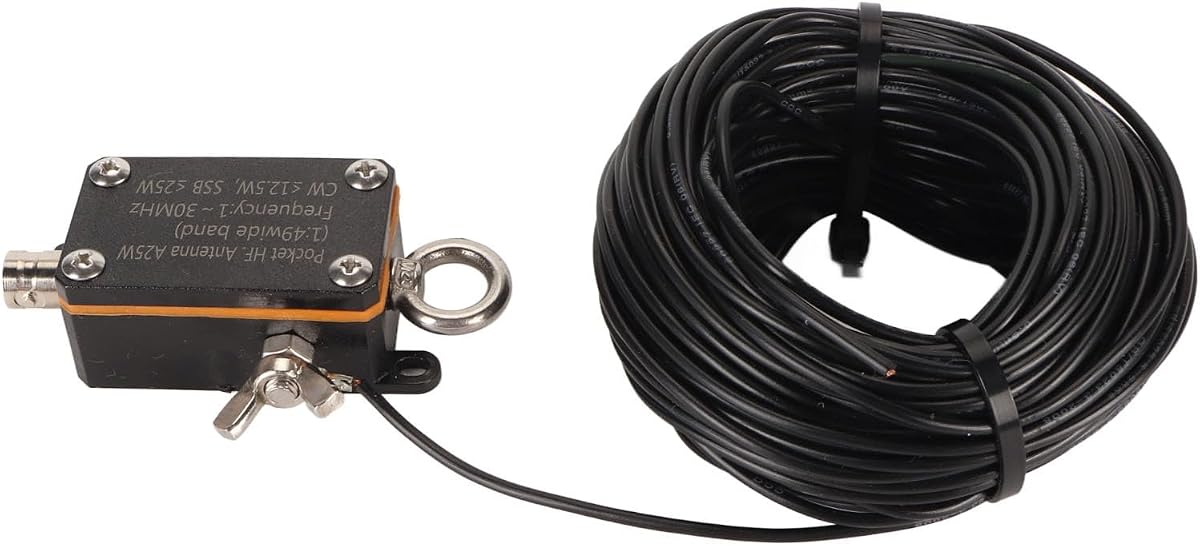
Designed specifically for portability, this short end fed antenna fits easily into backpacks for remote activations. Its PVC material keeps weight low while maintaining structural integrity for reliable signal transmission across 1 to 30 MHz.
We may earn a commission when you buy through this link, at no additional cost to you.
The 1:49 balun ensures compatibility with various HF radios, though power handling is limited to 25W for SSB. This makes it perfect for low-power CW and FE8 operations where efficiency is prioritized over raw strength.
The standard interface simplifies setup, allowing quick deployment in minutes. While not ideal for high-power contests, its convenience makes it a valuable addition for operators frequently traveling or hiking in challenging terrain.
If your priority is mobility and quick setup over maximum range, this model offers the best solution. It balances simplicity with performance for casual operators focused on exploration.
Its compact profile ensures it never adds significant bulk to your gear, making it ideal for backpacking adventures.
Optimized for QRP operations, it works exceptionally well with low-power transceivers for efficient communication without bulk.
We may earn a commission when you buy through this link, at no additional cost to you.
The LW-20 offers a traditional long wire approach with a perfect 5.0 rating, indicating high user satisfaction. It covers 80 to 6 meters, providing extensive multiband support for various HF communication needs without complex tuning.
We may earn a commission when you buy through this link, at no additional cost to you.
Its design focuses on raw efficiency for long-distance contacts. The standard aerial interface ensures compatibility with most HF transceivers, making it easy to integrate into existing setups for home or permanent field stations.
Space is a consideration, as long wire antennas require significant length and clearance. This limits its suitability for portable operations, making it better suited for fixed locations where maximum signal strength is required.
For operators focused on long-range communications and maximum efficiency, this model delivers exceptional results. Its perfect rating suggests consistent performance across a wide range of amateur radio environments.
The perfect rating indicates users consistently find the performance and setup process meets their expectations for long wire communication.
Supporting 80 to 6 meters allows access to both low and high frequency bands for versatile communication capabilities.
We may earn a commission when you buy through this link, at no additional cost to you.
With a 4.8 rating, the WOOKLEA End Fed Half Wave offers impressive performance across 1 to 30 MHz. It supports multiple modes including CW, FM, AM, FT4, FT8, and SSB, making it highly versatile for different operating styles.
We may earn a commission when you buy through this link, at no additional cost to you.
The optimized 1:64 matching ratio reduces signal loss, enhancing reception efficiency even for long-distance communication. Users can handle up to 150W on SSB, which is excellent for power-hungry operations.
Setup requires attention to wire length trimming for optimal results. The compact and portable design allows for both temporary emergency communication deployment and long-term outdoor installation scenarios effectively.
This model balances power and portability, making it a strong choice for operators needing flexibility without sacrificing signal strength. It is suitable for a broad range of amateur radio applications.
Handling 150W on SSB ensures you can push signals harder during contests or difficult propagation conditions.
Optimized impedance matching minimizes loss, resulting in clearer signals and more successful contacts over distance.
We may earn a commission when you buy through this link, at no additional cost to you.
This upgraded model delivers robust performance across 1 to 30 MHz with a 150W SSB capacity. Its 1:64 balun supports multiple bands including 80m, 60m, 40m, and others, ensuring reliable signal quality even for long-distance communication.
We may earn a commission when you buy through this link, at no additional cost to you.
The waterproof ABS shell ensures durability, allowing normal operation in bad weather conditions. This makes it suitable for both permanent outdoor installations and temporary emergency response communications.
Wire preparation requires trimming to suitable frequencies for optimal performance. Using an antenna analyzer is recommended to fine-tune the frequency point rate, which may add steps to the initial setup process.
For professionals and enthusiasts demanding reliability and high power, this antenna offers exceptional value. Its strong compatibility ensures it works with a variety of radio structures and equipment.
The waterproof design ensures consistent operation during rainstorms or humid conditions without signal degradation.
Its quick setup capability makes it ideal for emergency communications where reliability and speed are critical.
We may earn a commission when you buy through this link, at no additional cost to you.
The professional 1:64 balun multiband antenna covers 1 to 30 MHz without a tuner, ideal for operators seeking seamless HF band operation. Its high-hardness ABS material ensures resistance to wear and tear for long-term outdoor use.
We may earn a commission when you buy through this link, at no additional cost to you.
It supports up to 100W for SSB and 60W for FT8, FM, and other modes, making it perfect for both casual and professional enthusiasts. The standard interface simplifies setup, making it hassle-free for field operations.
Wire preparation guidelines recommend trimming 20m or 40m configurations for optimal performance. While portable, operators must account for environmental factors to ensure stability during deployments.
This model is an ideal choice for those demanding reliable power handling and durability. Its robust construction ensures consistent signal transmission across a wide range of amateur radio applications.
High-hardness ABS provides superior protection against physical damage and environmental wear.
Seamless operation across HF bands allows effortless switching during communication without complex adjustments.
We may earn a commission when you buy through this link, at no additional cost to you.
This multi-band antenna offers natural resonance across eight bands from 3.5 to 29.7 MHz, eliminating the need for external tuning in most scenarios. The cold drawn multi-strand copper wire ensures durability and efficient signal transmission.
We may earn a commission when you buy through this link, at no additional cost to you.
With a 150W SSB power rating, it handles high-duty modes effectively. The included 20m rope simplifies setup, while the sturdy 64:1 balun provides reliable impedance matching for consistent contacts across all supported frequencies.
The 39.6m wire length requires ample space and clear positioning to achieve optimal performance. Users should keep the antenna three meters away from buildings and ground to minimize interference.
It is a robust investment for operators seeking maximum frequency coverage without tuning complexity. This model represents excellent value for permanent home stations or serious field operations.
Natural resonance on eight bands allows for rapid frequency switching during contests or emergency communications.
The inclusion of an installation rope helps reduce setup time during urgent activations or field deployments.
We may earn a commission when you buy through this link, at no additional cost to you.
Selecting the right end fed antenna involves evaluating several key factors that impact performance, durability, and setup convenience. Understanding these elements helps ensure your investment matches your operational goals and environmental conditions.
Different models support varying numbers of HF bands. Some cover standard ranges like 10m to 40m, while others extend from 1 to 30 MHz for broader communication opportunities. Consider which bands you use most frequently for contests or casual contacts.
Prioritize models that naturally resonate on your preferred bands to minimize the need for external tuners and maximize signal efficiency.
Power ratings indicate how much wattage the antenna can safely handle on modes like SSB, CW, or FT8. Higher power capacity ensures better performance during contests or weak-signal operations where transmission strength matters.
Select a model with power limits matching your radio's output to prevent overheating or damage during extended transmission periods.
Most end fed antennas use a 1:64 or 49:1 balun to match impedance between the antenna and your transceiver. This affects how efficiently your signal is transmitted without requiring an external tuner.
Check the balun specifications to ensure compatibility with your existing radio setup for seamless operation across desired frequencies.
Construction materials determine the longevity and reliability of the antenna in outdoor conditions. ABS housing, high-hardness plastics, and waterproof connectors protect against UV exposure and moisture.
Invest in models with reinforced insulators and sealed housings to ensure stable performance across varying weather conditions.
For field operations like POTA or SOTA, weight and size are critical. Compact designs allow for quick deployment without burdening your pack, whereas larger units are better suited for home stations.
Choose lighter models if you plan to hike to remote activation spots, or opt for heavier-duty options for permanent installations.
Some antennas come with installation ropes, connectors, or pre-cut wire lengths to simplify setup. Others require trimming wires to specific frequencies, which adds complexity to the initial deployment.
Consider whether you need a quick deployment solution or if you prefer to fine-tune wire lengths for optimal performance.
Outdoor antennas face exposure to rain, wind, and temperature shifts. Weatherproof designs and UV-resistant materials prevent degradation over time, maintaining signal quality during long-term deployment.
Verify that connectors are sealed and housing is rugged to withstand the specific climate conditions where you operate most frequently.
Pricing varies significantly based on features, materials, and included accessories. Budget options offer basic functionality while premium models provide enhanced durability and broader frequency support.
Balance cost against necessary features to find a model that meets your performance needs without overspending on unnecessary capabilities.
Proper installation ensures optimal signal transmission and prevents damage during use. Always check the antenna manual for recommended mounting heights and clearances from metal objects or trees.
Regular inspections of insulation and connectors help detect wear before failures occur. Clean dust and debris from the housing to maintain waterproof integrity and thermal efficiency during operation.
When not in use for extended periods, store the antenna in a dry place to avoid moisture-related damage. Recheck tension on guy lines before each field deployment to maintain safe and stable setup conditions.
Most models cover standard HF ranges from 10m to 40m, though some extended versions reach 1 to 30 MHz. Check manufacturer specs to ensure coverage includes your preferred frequencies for communication.
Many end fed antennas include built-in baluns that eliminate the need for an external tuner on common bands. Some random wire versions may still require tuning depending on your setup and frequency.
Power ratings typically range from 25W to 150W depending on SSB, CW, or FT8 modes. Always verify the power limit matches your radio's output to prevent damage or signal loss.
Yes, many models are durable enough for permanent outdoor installations with proper mounting. Check weather resistance specs and ensure your mounting setup meets safety standards.
Unlike vertical antennas, most end fed designs do not require a ground system because the balun provides counterpoise functionality. Always follow specific installation instructions for your model.
Absolutely, many models are designed for portability with lightweight materials and compact packaging. Look for setups rated for quick deployment to maximize efficiency during field trips.
ABS housing, UV-resistant plastics, and waterproof connectors offer the best protection against weather. High-hardness materials also prevent wear from wind or debris in exposed locations.
Regularly inspect connectors and wire for signs of wear or damage. Clean debris from the housing and store the antenna properly when not in use to extend its lifespan significantly.
We have highlighted the top ten end fed antennas that balance performance, durability, and ease of use for various ham radio scenarios. Whether you need a portable field option or a permanent home station, the right model can transform your communication capabilities.
Prioritize factors like frequency coverage, power handling, and weather resistance based on your specific operating environment. A well-chosen antenna minimizes setup time while maximizing signal efficiency for every contact.
Always verify current specifications and availability before purchasing to ensure compatibility with your radio. These models provide reliable paths to successful communications across amateur radio networks.