
GeeekPi 2-Pack I2C 1602 LCD Display Module
4.6Editor score
I2C interface reduces wiring
Blue backlight with contrast control
Compatible with most boards
Discover the top Arduino LCD Display options for 2026. We compare features, compatibility, and value to help you choose the perfect screen for your project.
Selecting the right display for your microcontroller projects is crucial for creating interactive and informative interfaces. An Arduino LCD Display allows you to output text, numbers, and graphics directly from your code. Whether you are building a weather station or a smart home dashboard, the right screen makes a big difference.
We have carefully evaluated ten popular options available on the market today. Our analysis focuses on compatibility with common boards, ease of wiring, display clarity, and overall value. We looked at character screens, OLED modules, and larger TFT interfaces to cover various project needs.
Each pick below highlights key specifications and ideal use cases for makers and engineers. Please note that availability and pricing can change frequently on retail platforms. We recommend checking the latest details before purchasing to ensure you get the best deal for your specific requirements.
4.6Editor score

4.5Editor score

4.7Editor score
This table provides a side-by-side look at all ten selected modules. It helps you quickly compare display types, interfaces, and key specifications to find the best fit for your build.




This package offers three 1602 LCD screens with I2C adapters, making it ideal for projects requiring multiple displays or spares. The blue backlight provides excellent contrast in various lighting conditions. It scores well for ease of use and compatibility with standard Arduino boards.
We may earn a commission when you buy through this link, at no additional cost to you.
The I2C interface significantly reduces the number of GPIO pins needed, freeing up resources for other sensors. The built-in potentiometer allows you to adjust contrast and brightness easily without complex code. This hardware simplicity makes it a favorite for students and hobbyists.
While it uses a standard character display rather than graphics, it is sufficient for text-heavy applications like sensor readouts. The only trade-off is the need to include an I2C library in your code, which adds slight complexity for beginners but pays off in wiring efficiency.
It is perfect for IoT projects, smart building prototypes, or educational electronics classes. If you need reliable text output without consuming many pins, this set provides exceptional value and reliability for your next build.
The I2C protocol uses only two data lines, which keeps your breadboard neat and reduces clutter compared to parallel connections.
A physical potentiometer on the back lets you tweak the display contrast to ensure readability in bright or dark environments.
We may earn a commission when you buy through this link, at no additional cost to you.
This two-pack is an excellent choice for builders looking to minimize costs while maintaining quality. The blue backlight ensures text is readable, and the I2C interface simplifies connections. It is a solid entry point for those new to LCD modules.
We may earn a commission when you buy through this link, at no additional cost to you.
The modules are small and fit well on standard breadboards. You can use them for simple status indicators or data logs. The potentiometer helps you fine-tune the display so you do not strain your eyes during development.
Compared to graphic displays, this is limited to text and basic symbols. However, for many common tasks like showing sensor values or system messages, it is more than enough. The low price allows you to buy extras for redundancy.
Choose this if you need multiple displays for a multi-node project without breaking the bank. It is reliable, easy to integrate, and works seamlessly with standard Arduino libraries for text output.
Getting two units in one package reduces the per-unit cost, making it easier to afford multiple displays for larger setups.
The small footprint saves space on crowded prototyping boards, leaving room for other essential components and wiring.
We may earn a commission when you buy through this link, at no additional cost to you.
This module stands out with its 240×320 resolution and IPS technology, offering sharp images and vibrant colors. The SPI interface allows for fast updates, making it suitable for dynamic dashboards or animations. It represents a significant step up from standard character displays.
We may earn a commission when you buy through this link, at no additional cost to you.
The IPS panel ensures that colors remain consistent even when viewed from an angle, which is crucial for handheld devices. You can display charts, icons, and detailed UI elements. The included backlight ensures visibility in low-light environments.
The higher resolution means more data to manage and slightly more complex code. You will need to use specific libraries to handle graphics. However, the visual payoff is worth the extra effort for projects that demand a polished look.
If you are building a handheld device or a sophisticated dashboard, this screen provides the visual quality needed to impress. It balances performance and size well for advanced makers.
The IPS panel ensures that colors stay accurate and bright from any angle, perfect for user interfaces.
SPI communication allows the screen to update quickly, enabling smooth animations and real-time data displays.
We may earn a commission when you buy through this link, at no additional cost to you.
OLED technology offers incredible contrast because pixels emit their own light. This module provides crisp graphics on a small 0.96-inch screen. The three-pack gives you plenty of spares for testing and prototyping different interfaces.
We may earn a commission when you buy through this link, at no additional cost to you.
The self-luminous nature means deep blacks and bright characters. It looks modern and professional on any project. The I2C interface keeps wiring simple, and the SSD1306 driver has extensive community support.
While the size is small, it is perfect for status indicators or compact handheld tools. The fixed yellow-blue zones help organize information effectively. You cannot change the backlight color, but the contrast is excellent.
Use this when you need a small, high-impact display for a sensor dashboard or robot status panel. It saves space and power while delivering a premium look.
Since pixels turn off completely for black, the display achieves perfect contrast for sharper text and images.
Its small size fits into tight spaces, and low power usage is ideal for battery-operated projects.
We may earn a commission when you buy through this link, at no additional cost to you.
This shield combines a 2.8-inch display with resistive touch functionality, allowing interactive menus and buttons. The SD slot lets you store assets directly. It transforms a simple project into a fully interactive system.
We may earn a commission when you buy through this link, at no additional cost to you.
The touch input works well with the included stylus for calibration. You can build custom control panels easily. The resolution allows for detailed icons and text. It is a great solution for home automation or data visualization.
It does use many pins due to the parallel interface, which can limit other connections. However, the functionality is unmatched in this price range. The learning curve is steeper due to the driver requirements.
Ideal for projects requiring user input, like a gaming console or control panel. The ability to store assets on an SD card makes it versatile for complex applications.
Touch capabilities let users interact with menus and buttons directly on the screen without external knobs.
The SD card slot allows you to load images and fonts externally, expanding the display capabilities beyond built-in limits.
We may earn a commission when you buy through this link, at no additional cost to you.
Freenove is known for quality and support. This set integrates the conversion circuit directly, which improves signal stability. The included example code helps you get started quickly without extensive documentation.
We may earn a commission when you buy through this link, at no additional cost to you.
It supports most mainstream boards including ESP32 and Pico. The reliability of the circuit means fewer connection issues. The two-pack allows you to test different configurations easily.
The standard 16×2 format means you are limited to text. However, the ease of use makes it a strong contender for production prototypes. The online tutorials are well organized and easy to follow.
Choose this for projects where stability matters. If you need a reliable display that just works with standard code, this is a dependable choice.
By integrating the conversion circuit, the module reduces signal noise and improves communication stability with controllers.
Access to example code and technical support ensures you can resolve issues quickly during the development process.
We may earn a commission when you buy through this link, at no additional cost to you.
This module is designed for simplicity. It comes with a dedicated library that simplifies the code. The four-wire setup ensures you do not clutter your board. It is a solid choice for quick prototyping.
We may earn a commission when you buy through this link, at no additional cost to you.
The I2C interface is well documented, and the library is easy to call directly. It saves time writing low-level code. The contrast potentiometer is easy to access and adjust.
It is limited to text output, but that keeps the focus on essential functionality. It works reliably for basic data logging. The design is clean and fits standard breadboard layouts perfectly.
If you want a no-fuss display that just works, this is it. It is particularly good for beginners who want to focus on logic rather than driver setup.
A dedicated software library simplifies coding, allowing you to display text with just a few lines of commands.
The four-wire setup keeps your connections tidy, reducing the risk of wiring errors during assembly.
We may earn a commission when you buy through this link, at no additional cost to you.
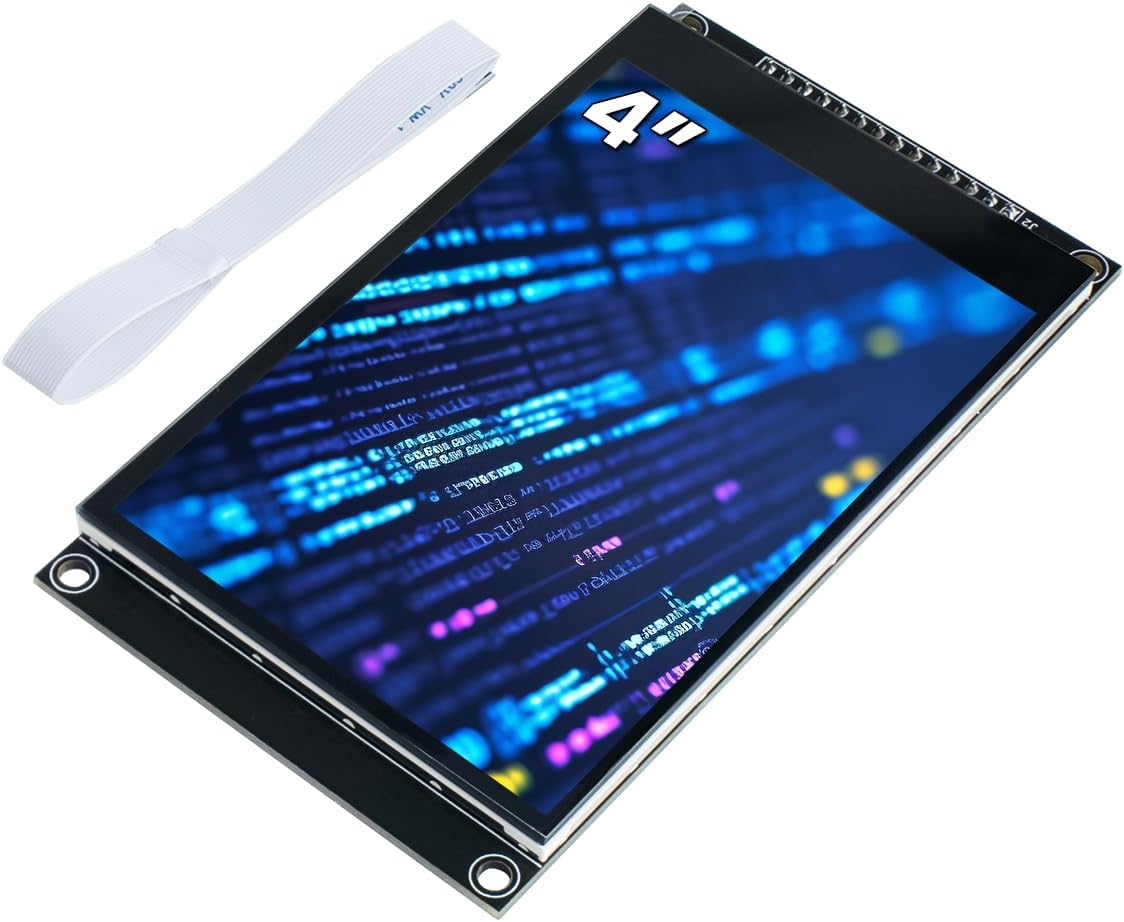
This module offers a larger 4-inch screen with capacitive touch, which is much more responsive than resistive options. The high resolution allows for detailed graphics and UI elements. It is ideal for interactive dashboards.
We may earn a commission when you buy through this link, at no additional cost to you.
Capacitive touch allows for smoother interactions, similar to modern smartphones. The TF card slot is useful for storing resources. The SPI interface keeps wiring minimal despite the larger size.
It requires more power than smaller modules. You must ensure your power supply can handle the load. The driver support varies across platforms, so check compatibility before purchasing.
For applications where touch is critical, such as control panels or handheld units, this is a powerful choice. It offers a professional look and feel for advanced projects.
Capacitive touch provides faster and more accurate input, making interactions feel natural and responsive.
The 320×480 resolution allows for detailed graphics, ensuring that UI elements are sharp and clear.
We may earn a commission when you buy through this link, at no additional cost to you.
This bulk pack offers five OLED modules for a great price. The high contrast and self-luminous nature make it readable in all conditions. The five-pack ensures you can replace any damaged units immediately.
We may earn a commission when you buy through this link, at no additional cost to you.
Each module draws very little power, making them perfect for battery-powered devices. The I2C interface simplifies wiring. You can use them for monitoring multiple sensors simultaneously in a single project.
The small size limits complex UIs. They are best for status indicators or simple data readouts. The lack of backlighting means the screen consumes power only when pixels are active.
Choose this for projects with multiple nodes that need visual feedback. The value is high, and the OLED quality is excellent for small displays.
Buying five units at once lowers the cost per module, allowing you to equip multiple projects without extra expense.
Self-luminous pixels mean low power usage, extending battery life for portable devices significantly.
We may earn a commission when you buy through this link, at no additional cost to you.
This module brings IPS color technology to a compact form factor. It fits easily into small enclosures while providing vibrant visuals. The SPI interface is efficient for transferring data quickly.
We may earn a commission when you buy through this link, at no additional cost to you.
The resolution allows for detailed text and icons. The IPS panel ensures that viewing angles do not distort the image. It is a good choice for small handheld devices.
Make sure voltage is consistent to avoid display issues. The setup is straightforward if you know SPI basics. It is more complex than I2C but offers higher performance.
Use this when you need color in a tight space. It is great for handheld tools or small interfaces where space is at a premium.
IPS technology in a small size allows for rich visuals without consuming too much space on your board.
The high color depth ensures that images look natural and vibrant, enhancing the visual appeal of your project.
We may earn a commission when you buy through this link, at no additional cost to you.
Choosing the right display depends on your project needs. This guide covers key factors to help you decide.
LCD displays use a fixed number of characters, usually 16×2, making them simple and affordable. OLED displays offer higher contrast and do not need a backlight. TFT displays provide full graphics and colors but are more complex.
Consider if you need text only or graphics. Choose OLED for contrast and color for rich visuals.
I2C uses only two wires and is ideal for saving pins on your board. SPI uses more wires but allows faster data transfer and higher resolutions.
Use I2C for simple text and SPI for complex graphics to balance performance and wiring simplicity.
Resolution determines how much information you can show. A 2.8-inch screen allows for icons and charts. A 1602 screen is perfect for simple data.
Pick a size that fits your enclosure. Higher resolution needs more memory and processing power.
LCDs with backlights use more power. OLEDs are more efficient because pixels turn off when not needed. If using batteries, low-power displays are critical.
Check the power specs for battery projects. Lower power ensures longer runtime.
Ensure the module works with your board. Most work with 3.3V or 5V. Check the logic level to avoid damage.
Always verify voltage compatibility. Use level shifters if needed to prevent hardware damage.
Some modules support touch, allowing buttons on the screen. Capacitive touch is more responsive. Resistive requires pressure.
Choose capacitive for a better user experience. Resistive is cheaper and works well enough for basic tasks.
Backlights make text readable in the dark. Blue light is common. Some OLEDs do not need backlights.
Consider your lighting environment. Choose adjustable backlight for better control.
Driver libraries must be available for your platform. Popular screens have extensive community support. This saves time during development.
Check online resources before buying. Community support helps troubleshoot issues faster.
Start by connecting the power and data wires correctly. Ensure you match the voltage levels. Use the provided libraries to initialize the display in your code.
To maintain the display, keep it free of dust and moisture. Avoid placing it near heat sources. If not in use for long periods, disconnect the power.
Update your libraries regularly to ensure compatibility with new boards. If you encounter issues, check the wiring first. Most problems are due to loose connections or wrong voltage.
I2C LCDs use fewer wires and are easier to connect. Parallel LCDs use more wires but can be faster. Most projects benefit from I2C simplicity.
Yes, but you may need an I2C multiplexer. You can also use SPI or UART. Ensure addresses are unique.
No. OLED pixels produce their own light. This saves power and offers better contrast compared to standard LCDs.
Open the IDE. Go to Manage Libraries. Search for LCD or OLED. Install the official or popular library.
Check wiring and voltage. Verify the contrast setting. Ensure the library is correctly configured.
Not always. You need a logic level converter. Check if the display supports 5V logic directly to avoid risk.
Use OLED displays. Turn off backlight when possible. Set display sleep modes when not in use.
Basic character LCDs cannot. You need a TFT or OLED with memory. Use libraries that handle graphics and images.
We reviewed ten options ranging from basic text screens to high-res touch displays. The top picks balance value and performance well for most projects.
If you want simple text, I2C LCDs are efficient. For rich visuals, TFTs are worth the extra effort. Pick based on your project goals.
Prices change frequently. Always check current listings before buying to get the best value for your build.